Voice and Tone for MyLegacy
MyLegacy.gov.sg is a one-stop government portal for end-of-life matters— which includes legacy planning, palliative care, death registration and estate settlement. The website includes consolidated information from 14 different government agencies and a legacy planning vault where users can record and share important documents.

CHALLENGE
Define a clear, consistent and easy-to-follow writing style for MyLegacy
SOLUTION
Conduct background research to clarify and understand the most appropriate tone to use for end-of-life matters
Define voice and tone guidelines with clear examples so it’s easy for everyone to follow
HOW I HELPED
Created voice and tone guidelines as a resource to share with the design team and stakeholders
Wrote and edited product copy
Helped the design team to apply voice and tone guidelines with clear examples and writing tips
Defining voice and tone guidelines
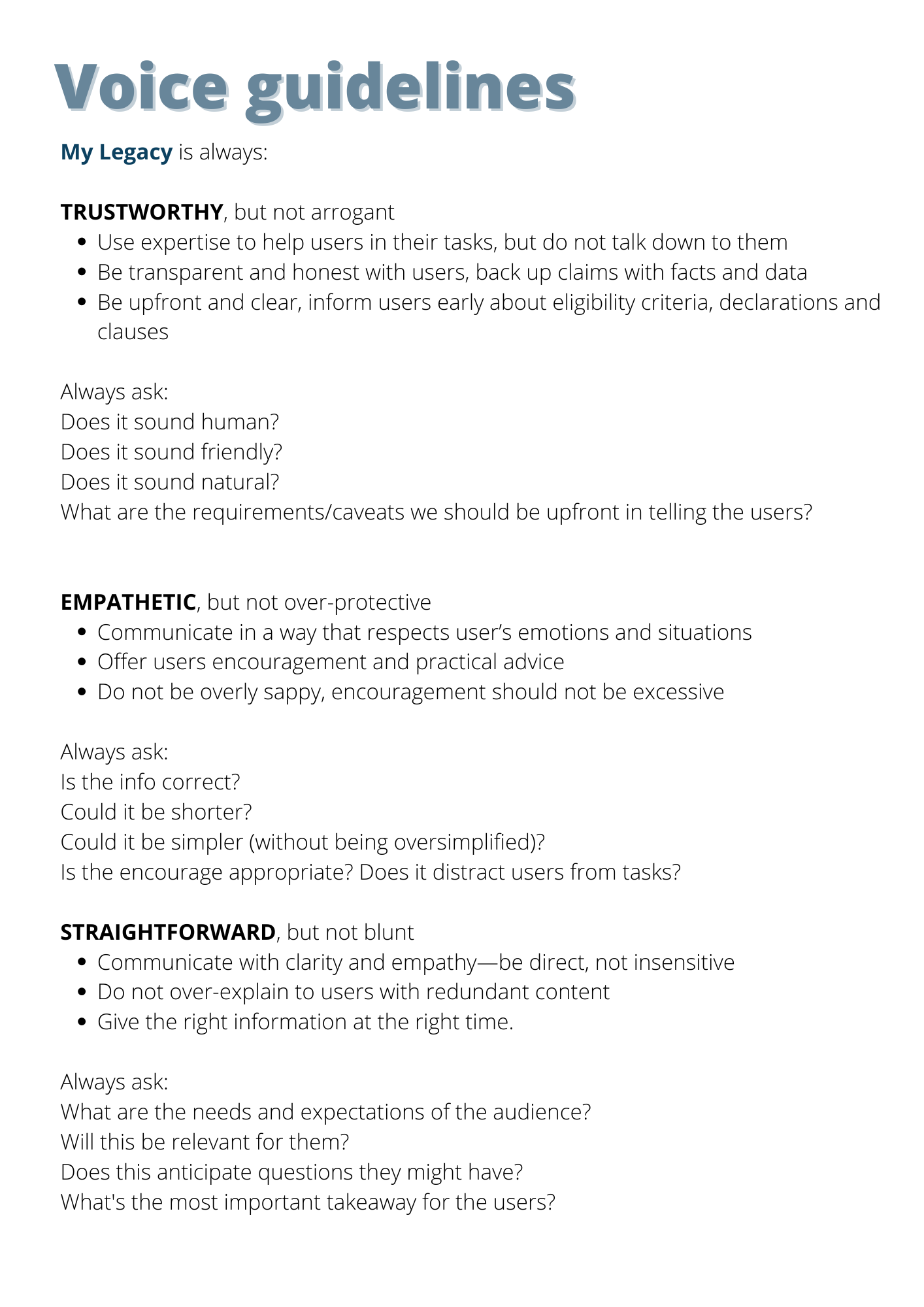
As MyLegacy’s first UX Writer and Content Strategist, I led the effort to define voice and tone guidelines and also wrote product copy. To start, I evaluated the existing government, legal and healthcare information that citizens had to go through for end-of-life matters.
Align guidelines with UX principles
Knowing that designers might also have to touch product copy, I focused on aligning voice and tone guidelines with the team’s UX principles. We prioritised clarity in content and empathy for the user’s emotional states, since end-of-life matters are emotionally-complex and tedious for most people. I also made sure the guidelines were easy to follow with clear examples and writing tips.
Understanding the users’ emotions
From background research, we found that most people were overwhelmed by the legal, healthcare and financial information they had to read. They tend to avoid and ignore end-of-life matters until they simply have to handle them. When a person struggles with grief and complex emotions, it also makes it even more difficult for them to process lengthy and complex information.
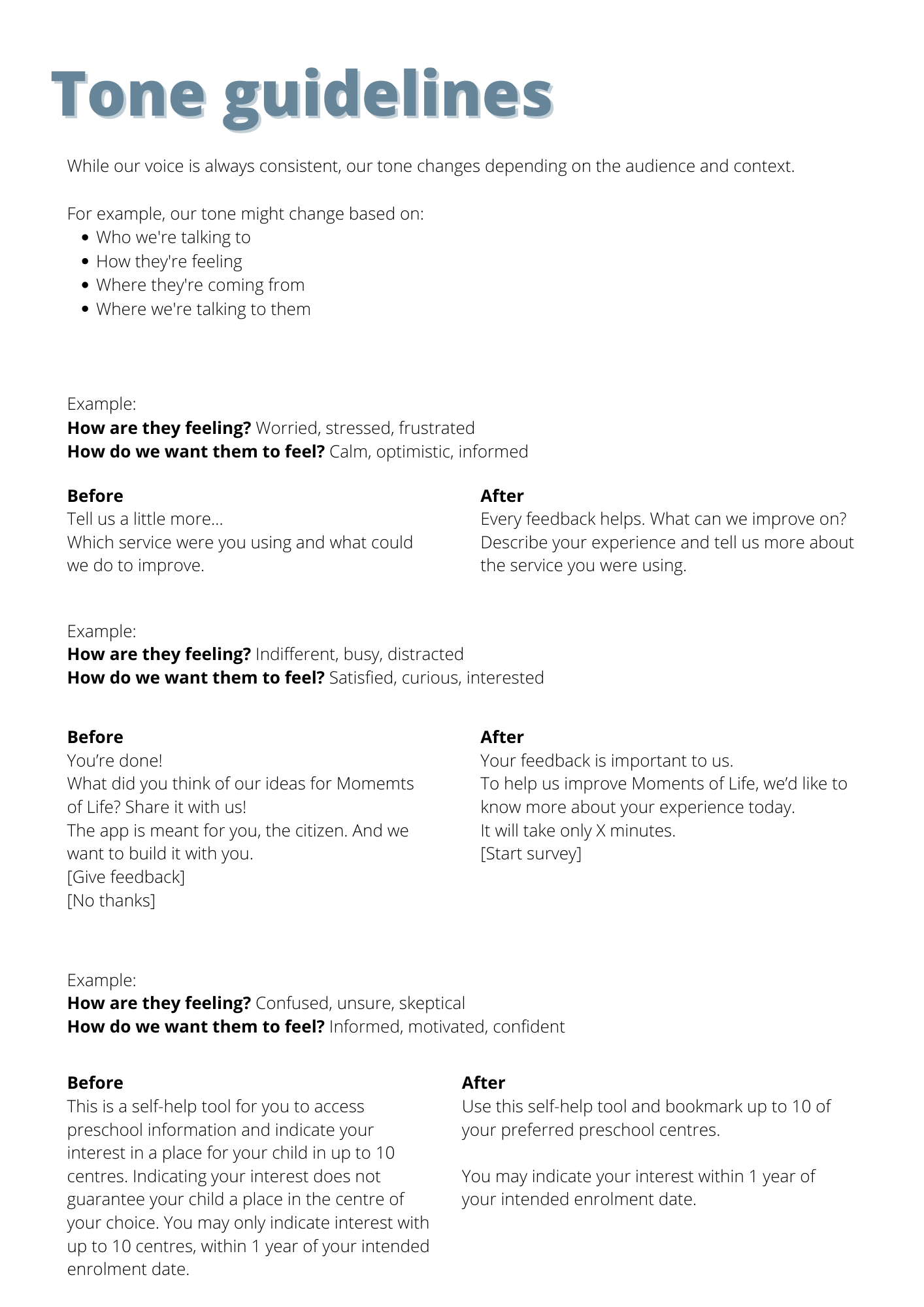
Adjusting tone dimensions
Concise, action-oriented
vs. Reassuring, Caring
For end-of-life matters, our UX research showed that people want to get things done. No one likes to spend hours reading death & bereavement content— being considerate meant providing the right amount of information to complete what they had to do.
However, this new focus on clear and concise copy is a huge departure from traditional, formal government writing.
Stakeholders were worried that concise articles would make the content sound cold and uncaring.
To investigate this, we tested 2 versions of copy directly with citizens and collected qualitative feedback.
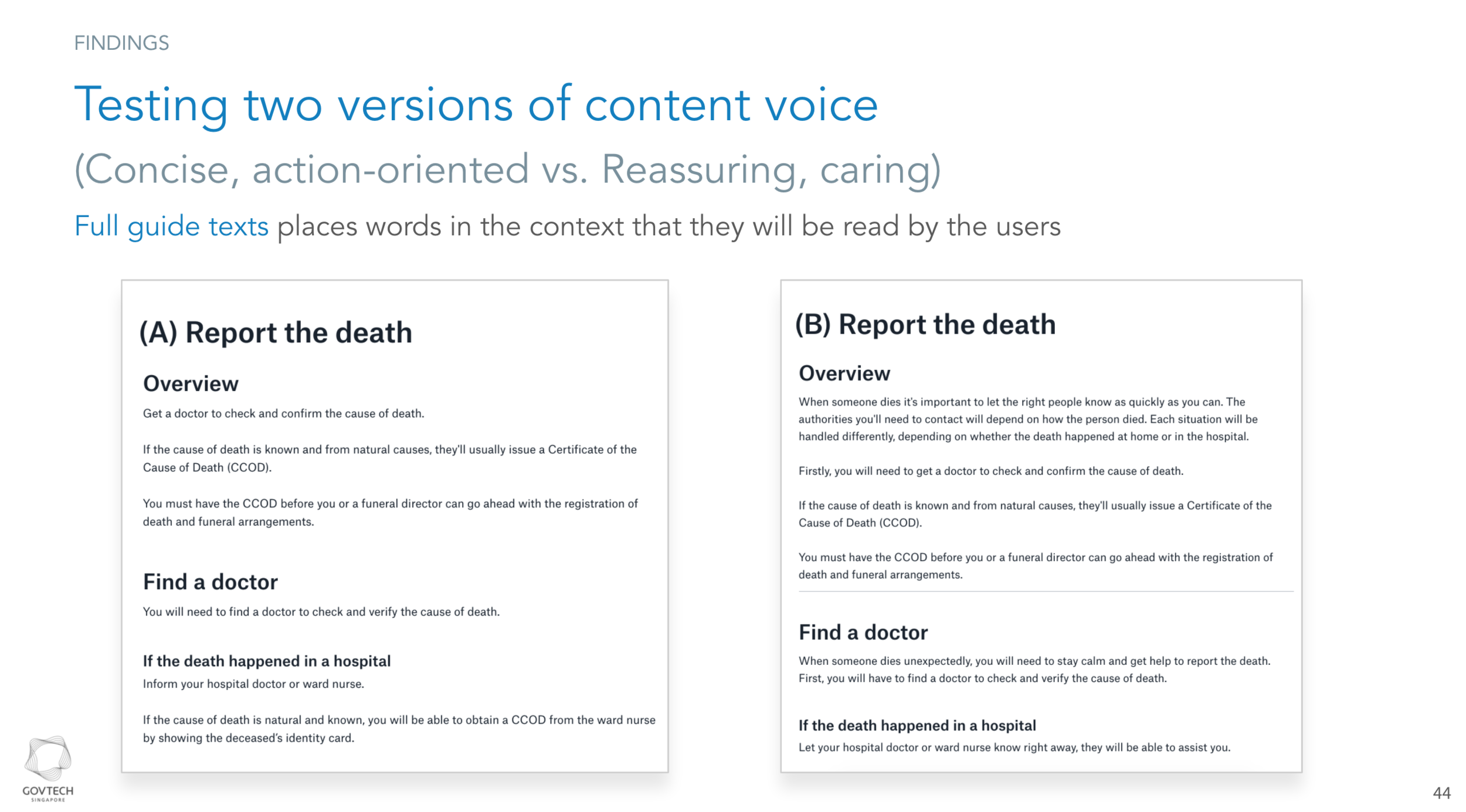
Testing content voice with citizens
Based on interviews with citizens, most preferred the articles with shorter introductions and clear call-to-action for legal, healthcare and financial decisions they have to consider.
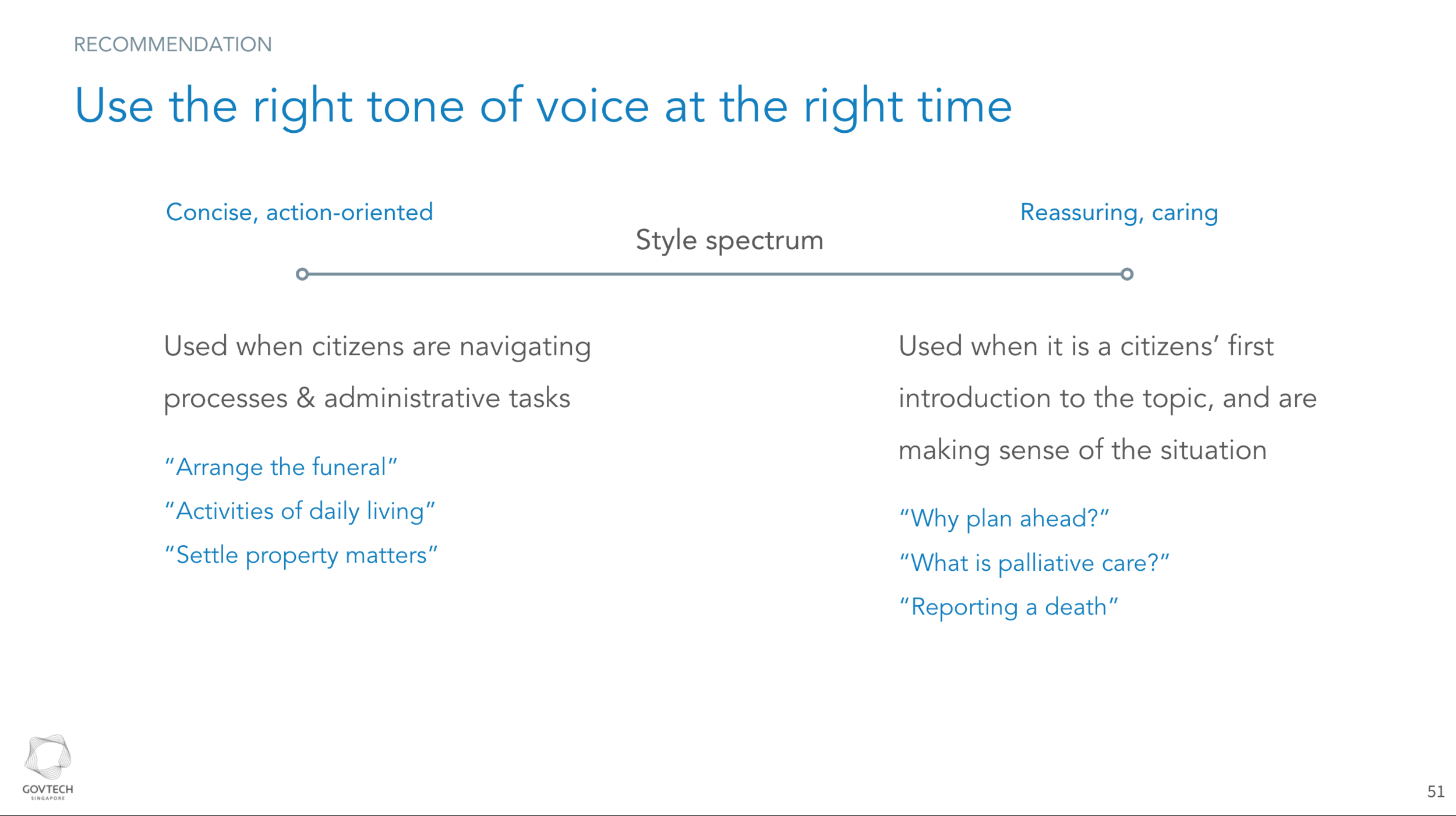
However, for topics that citizens were unfamiliar with, they appreciate articles with longer introductions and descriptions of real-life scenarios. Some examples would be ‘Planning for the end-of-life’, or ‘Palliative care options’.
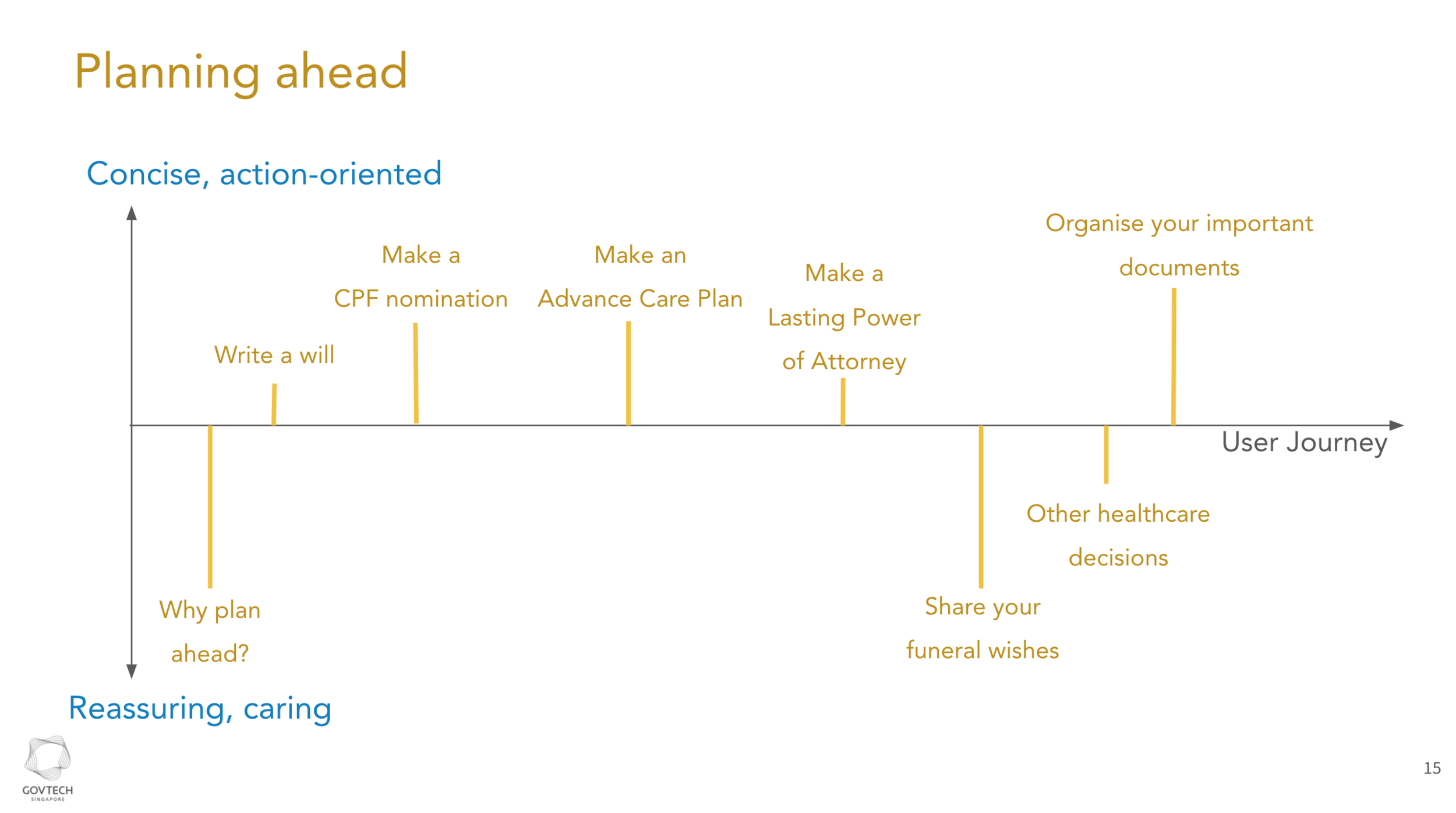
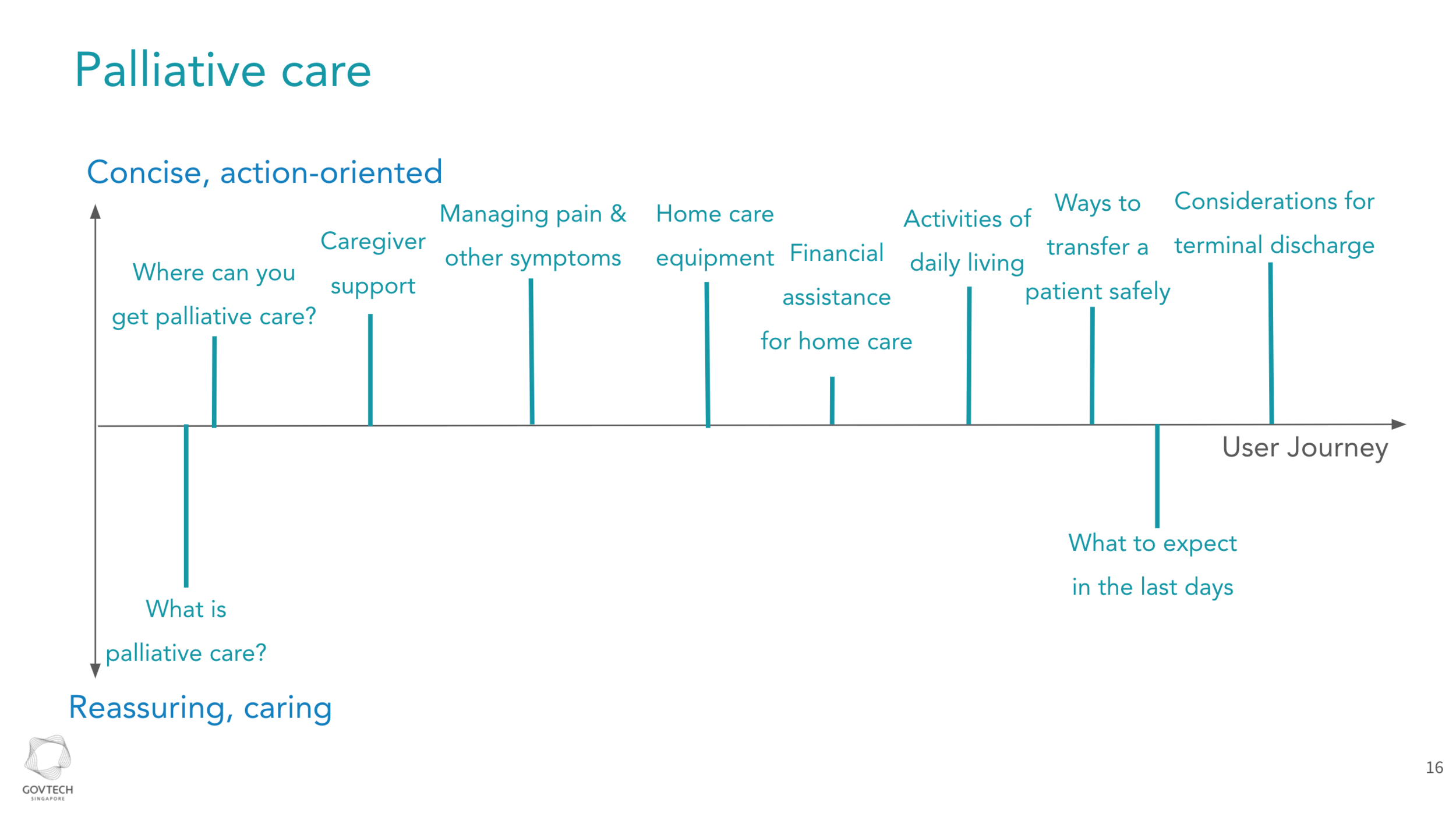
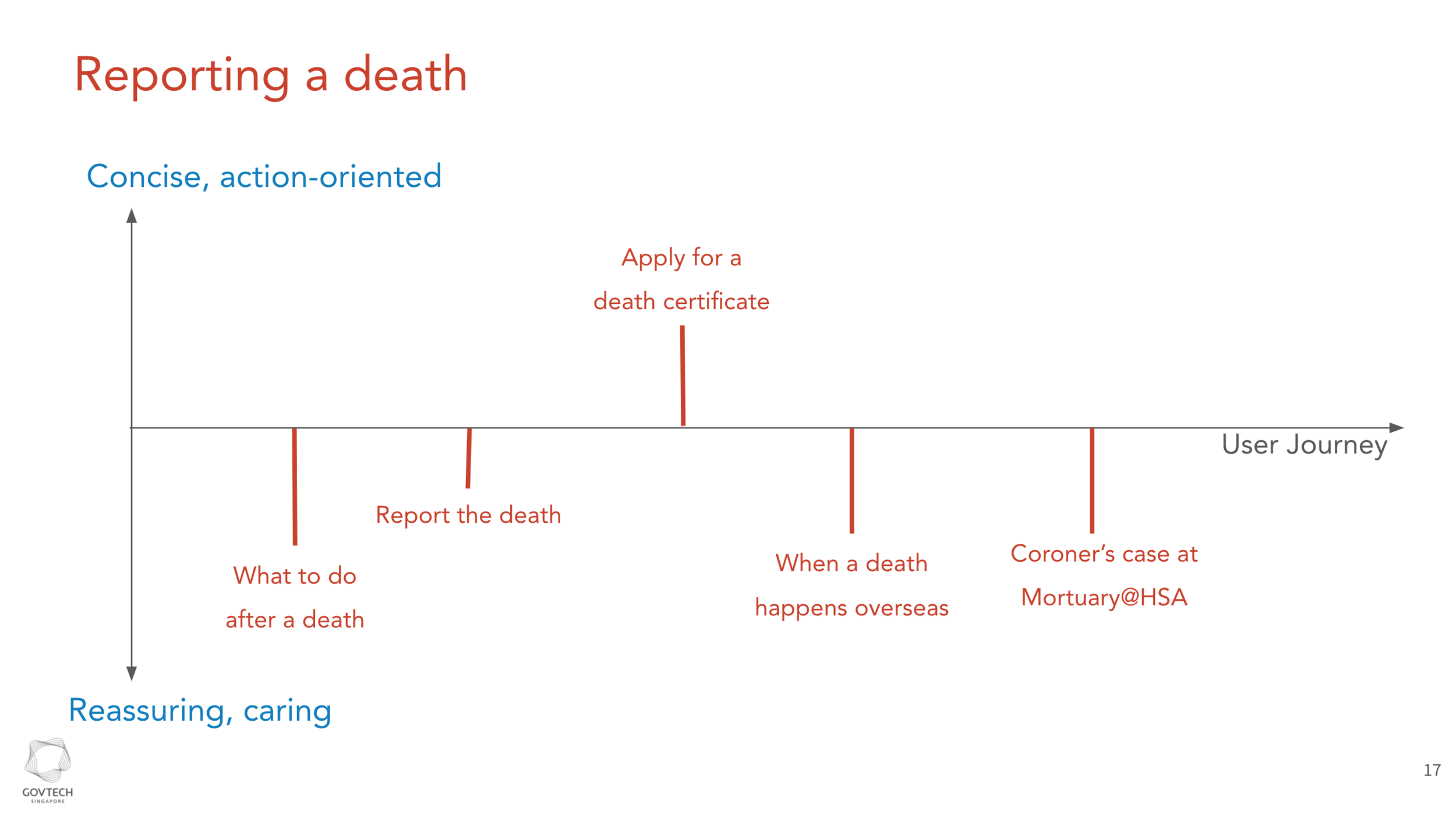
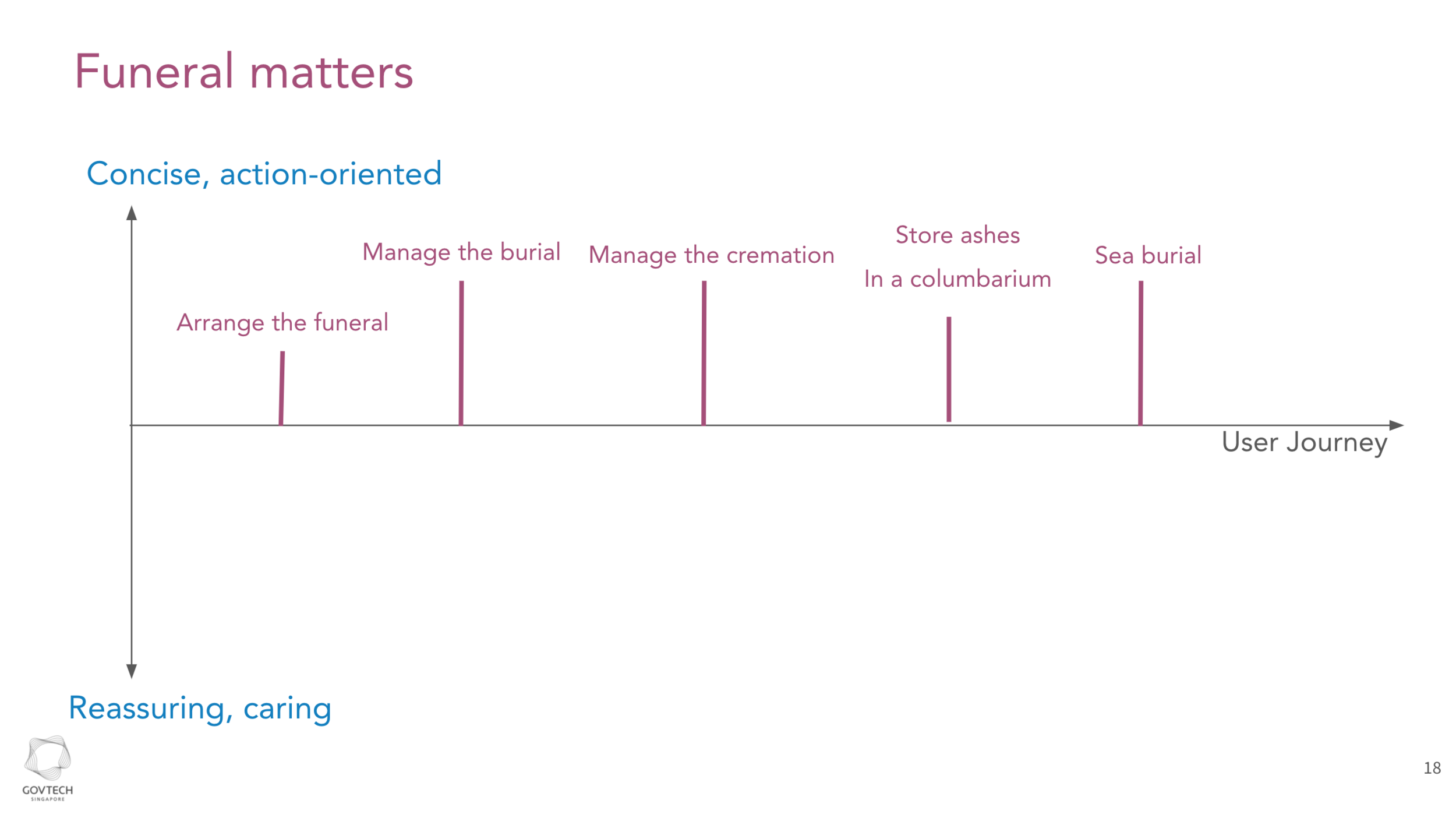
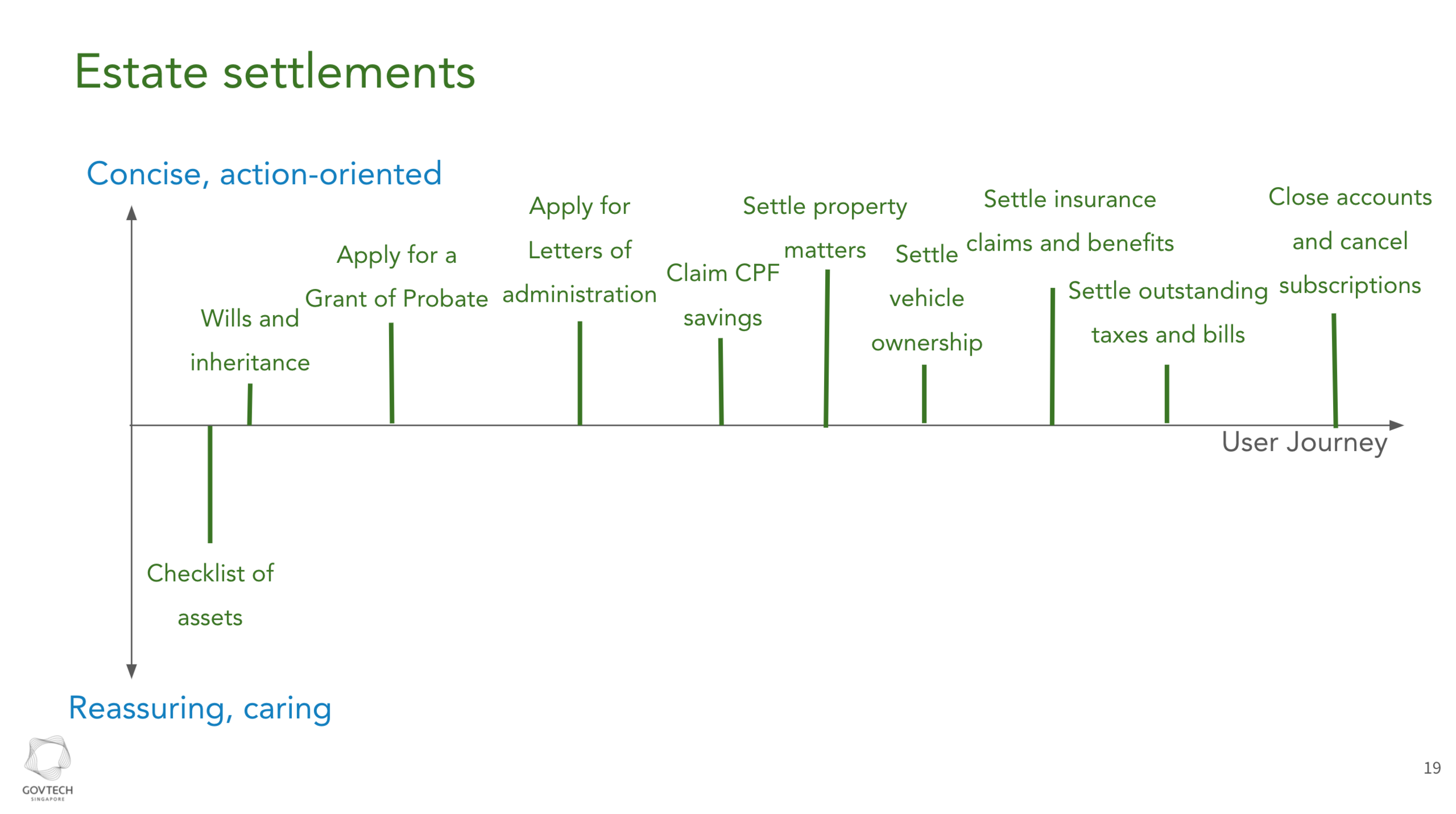
Mapping the tone across the experience
Taking their feedback into account, I worked with the designers to map out how the content tone would fluctuate at different points of the user’s journey when dealing with end-of-life matters.
By mapping the tone across the experience, this also helps marketing groups to design better content for outreach initiatives.
Outcome
It has been great to see designers, managers and product stakeholders referring to our content guidelines. By documenting voice and tone guidelines and collecting direct qualitative feedback from citizens, it gives everyone more confidence in designing for an emotionally-complex end-of-life user journey.