Preparing Google Pay’s design system for AI retrieval
As a Content Designer, I supported a cleanup of Google Pay’s internal design system documentation. The guidance had grown over time, and the team was reviewing how it could be made clearer, easier to maintain, and better structured for future AI-assisted retrieval.
MY ROLE
Content audit, information architecture, article rewriting, terminology alignment, Markdown structuring, and project coordination across eight content-guidance articles.
CHALLENGE
Google Pay’s design system had evolved over time, but its internal resources had not always kept pace. Guidance had accumulated across pages, some content was outdated, and it was not always clear where teams should go for the latest information.
At the same time, the team was exploring how internal documentation could support future AI-powered search and retrieval. Before that could happen, the source content itself needed to be cleaned up, structured, and made more consistent.
SOLUTION
I helped restructure the documentation around clearer user journeys, while improving the quality and consistency of the underlying content.
The goal was to make the design system easier for teams to use today, while creating cleaner source material that could support AI retrieval in the future.
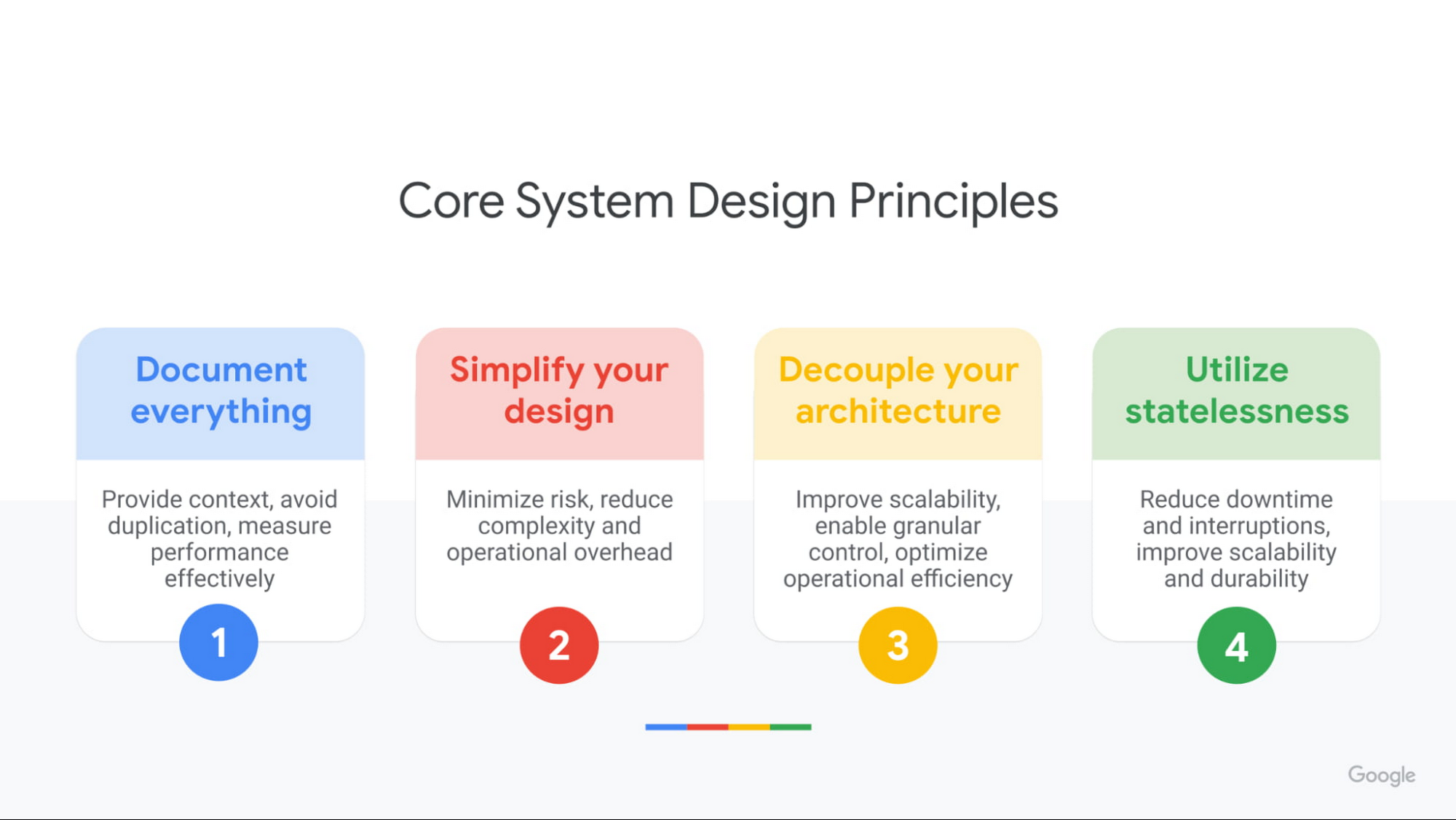
1. Create a reliable source of truth
I reviewed outdated, duplicated, and inconsistent guidance so teams — and future AI tools — had a cleaner source to reference.
2. Structure content for retrieval
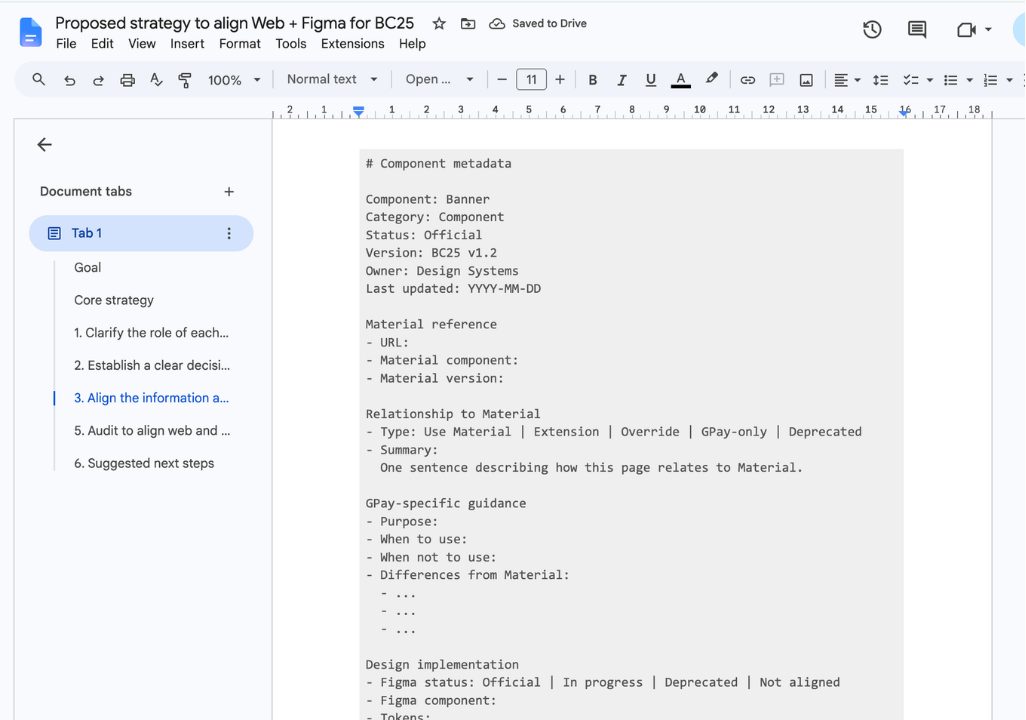
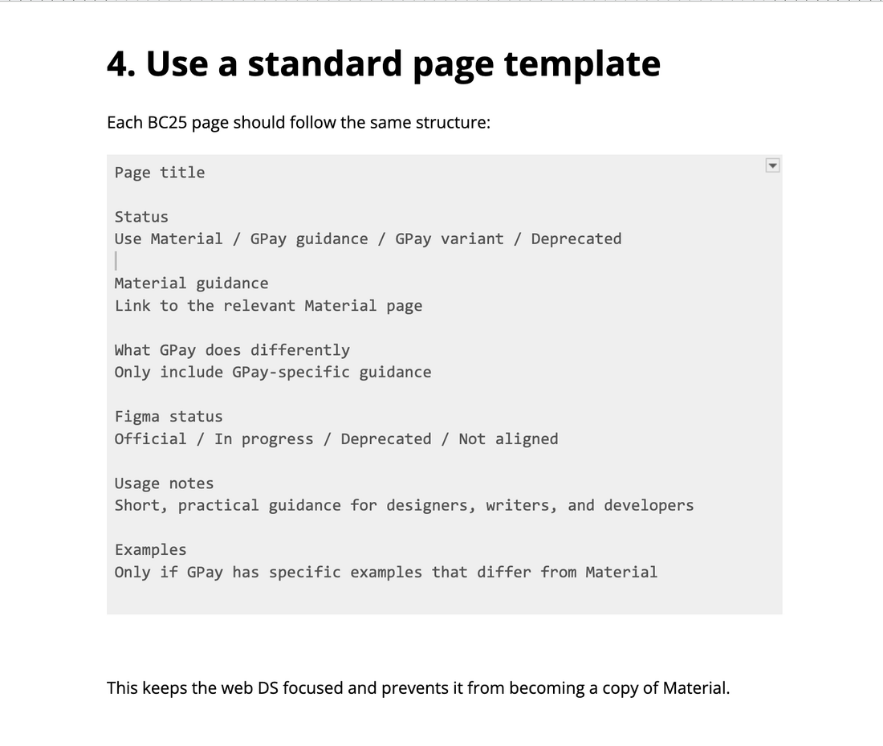
I introduced clearer headings, predictable article structures, consistent terminology, and Markdown formatting to make guidance easier to parse and retrieve.
3. Build for maintainability
I organised ownership, review status, and dependencies so the documentation could stay current instead of becoming another one-off cleanup.
WHAT I DID
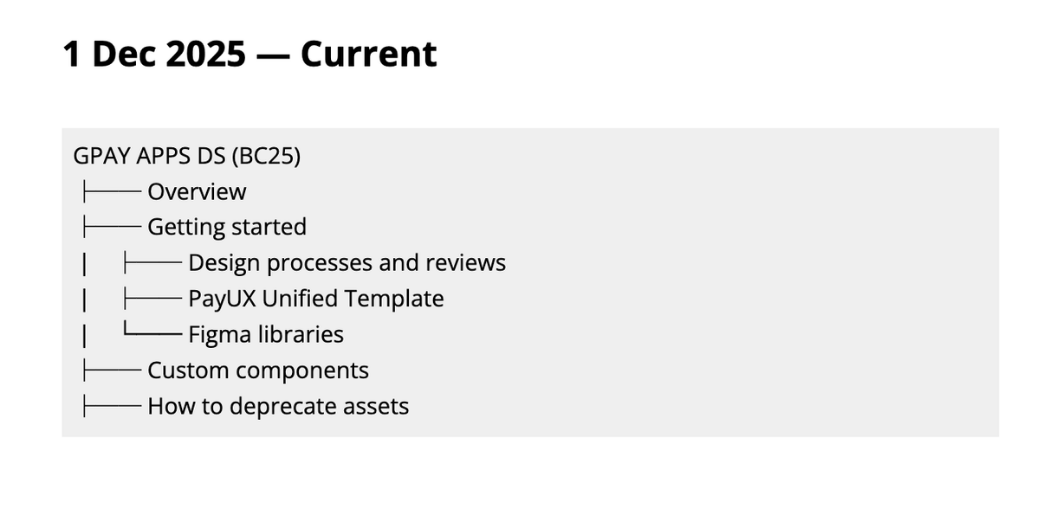
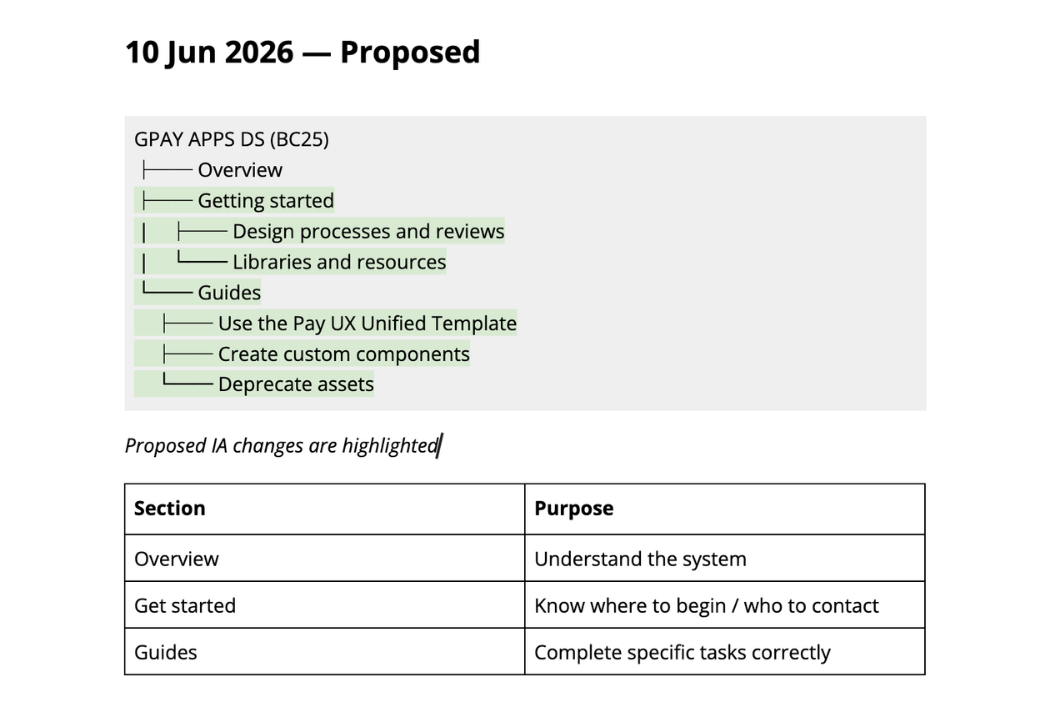
Revamped the information architecture to create clearer paths into key guidance and resources.
Rewrote introduction and navigation pages so teams could understand where to start and which guidance to use.
Clarified the relationship between Google Pay-specific guidance and Material guidance to reduce duplication and confusion.
Reworked articles into structured Markdown with consistent headings and content patterns for future AI retrieval.
Cleaned up outdated and inconsistent source content before restructuring it.
Organised a project tracker to manage page ownership, reviews, dependencies, and progress across the workstream.
OUTCOME
The work created a clearer, more maintainable documentation structure and made it easier for teams to find and use Google Pay design guidance.
It also established a cleaner, more structured source of truth that could support future AI-assisted retrieval and documentation workflows.